
Insulated Aluminum Roofing Sheets for Energy-Efficient Buildings
In modern architecture, energy efficiency is a primary goal for both commercial and residential buildings. Insulated aluminum roofing sheets have become a preferred material solution due to their exceptional thermal performance, lightweight nature, and durability. These advanced roofing systems not only reduce heat transfer but also contribute to lower energy consumption and carbon emissions.
Whether for industrial facilities, warehouses, offices, or residential housing, insulated aluminum roofing sheets offer a balance of strength, weather resistance, and energy-saving performance.
Insulated aluminum roofing sheets are typically composed of:
Outer Layer: High-strength aluminum alloy coated with anti-corrosive paint.
Insulation Core: Polyurethane (PU), polyisocyanurate (PIR), or mineral wool insulation for superior thermal efficiency.
Inner Layer: Optional aluminum foil or galvanized steel sheet for structural support.
| Component | Description | Function |
|---|---|---|
| Aluminum Outer Layer | Alloy grade 3003 or 5052 | Anti-corrosion, UV resistance |
| Insulation Core | PU/PIR/Mineral Wool | Thermal and acoustic insulation |
| Inner Surface | Galvanized steel / foil | Structural stability and reflection |
| Surface Coating | PVDF / PE | Long-term color retention and protection |
Before leaving the factory, each batch of insulated aluminum roofing sheets undergoes strict quality inspection and testing. A standard quality inspection report typically includes the following items:
| Inspection Item | Test Method | Standard Requirement | Result | Conclusion |
|---|---|---|---|---|
| Thickness Tolerance | Vernier Caliper (GB/T 8170) | ±0.02 mm | 0.018 mm | Pass |
| Density of Insulation Core | ISO 845 | ≥ 35 kg/m³ | 36.2 kg/m³ | Pass |
| Thermal Conductivity | ASTM C518 | ≤ 0.022 W/m·K | 0.021 W/m·K | Pass |
| Coating Adhesion | GB/T 9286 | Level 0 | Level 0 | Pass |
| Weather Resistance (UV Aging) | ASTM G154 | No cracking after 2000h | No change | Pass |
| Water Absorption | GB/T 8810 | ≤ 3% | 2.1% | Pass |
| Fire Rating | EN 13501-1 | Class B-s1,d0 | Class B-s1,d0 | Pass |
Each report ensures compliance with ISO 9001 Quality Management System, guaranteeing consistent product reliability.
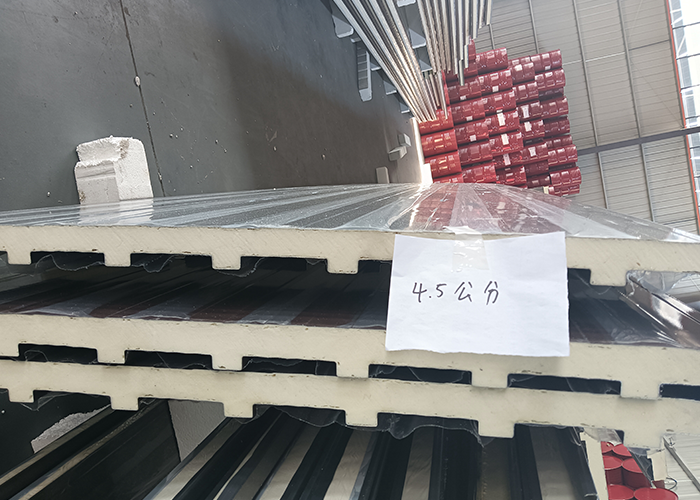
To ensure global applicability and compliance, insulated aluminum roofing sheets are tested according to international standards, such as:
| Category | Standard | Description |
|---|---|---|
| Thermal Performance | ASTM C518 / EN 12667 | Measures heat transfer rate |
| Fire Resistance | EN 13501-1 / ASTM E84 | Evaluates combustibility and smoke production |
| Mechanical Strength | GB/T 3880.1 / ASTM B209 | Defines tensile and yield strength for aluminum |
| Corrosion Resistance | ISO 9227 (Salt Spray Test) | Simulates long-term corrosion exposure |
| Coating Durability | ASTM D2244 / D3363 | Tests color change, hardness, and adhesion |
| Environmental Certification | RoHS / REACH | Ensures non-toxic and eco-friendly composition |
These certifications demonstrate that the roofing materials meet international building energy efficiency standards and environmental sustainability requirements.
The multi-layer structure minimizes heat conduction, maintaining indoor temperature stability and reducing HVAC energy use.
Aluminum’s high strength-to-weight ratio allows for easy installation while maintaining excellent load-bearing performance.
The PVDF-coated aluminum surface resists oxidation, acid rain, and coastal salt spray — extending service life up to 30 years or more.
With a Class B-s1,d0 fire rating, the sheets provide effective fire protection for industrial and commercial applications.
The insulated core reduces sound transmission, improving indoor acoustic comfort.
Aluminum is 100% recyclable, supporting green building certification such as LEED and BREEAM.
Proper maintenance extends the lifespan and appearance of insulated aluminum roofing sheets.
Clean with mild soap and water every 6–12 months.
Avoid abrasive brushes or high-pressure water that may damage coatings.
Rinse thoroughly to remove residue and prevent stains.
| Frequency | Inspection Focus |
|---|---|
| Quarterly | Check for loose fasteners and sealant cracks |
| Biannually | Inspect coating for discoloration or corrosion |
| Annually | Evaluate insulation integrity and surface deformation |
Do not walk directly on panels without safety planks.
Remove accumulated debris (leaves, dust, ice) to prevent moisture retention.
Recoat or repair damaged sections immediately to avoid corrosion spread.
| Issue | Possible Cause | Solution |
|---|---|---|
| Water Leakage | Improper joint sealing or fastener loosening | Reseal with compatible waterproof sealant and tighten bolts |
| Coating Fading | UV exposure or poor cleaning chemicals | Clean with neutral detergent and reapply protective coating |
| Condensation Inside Panel | Poor ventilation or temperature difference | Improve air circulation and apply vapor barriers |
| Noise During Expansion | Thermal expansion due to extreme heat | Use flexible fasteners and thermal spacers |
| Insulation Weakening | Long-term UV exposure or water ingress | Replace affected panels or insulation cores |
By implementing timely maintenance and addressing small issues early, users can ensure consistent insulation efficiency and aesthetic quality.
Insulated aluminum roofing sheets are widely used in:
Energy-efficient residential buildings
Commercial centers and exhibition halls
Cold storage and food processing facilities
Agricultural warehouses and livestock barns
Airport terminals and industrial workshops
Their versatility makes them a preferred roofing option in regions with extreme climates — from hot deserts to humid coastal zones.
Each panel is carefully packed to prevent surface scratches and deformation during transportation.
| Packaging Method | Details |
|---|---|
| Protective Film | Anti-scratch PE film on visible surface |
| Stacking | Foam layer between sheets to prevent friction |
| Pallet Base | Wooden or steel pallets with edge protectors |
| Wrapping | Moisture-proof wrapping for long-distance transport |
All packaging complies with export safety standards, ensuring that customers receive the product in perfect condition.
Using insulated aluminum roofing sheets contributes significantly to green building certification by:
Reducing annual cooling/heating energy consumption by up to 40%.
Enhancing building envelope performance.
Supporting global carbon neutrality goals through recyclable materials.
The combination of thermal insulation, lightweight structure, and low maintenance needs makes this roofing solution ideal for sustainable construction projects.
Insulated aluminum roofing sheets provide a modern, reliable, and eco-friendly roofing system for energy-efficient buildings. Backed by rigorous quality inspections, certified international testing standards, and a clear maintenance framework, they ensure long-term performance, cost savings, and architectural value.
For architects, contractors, and developers pursuing energy-efficient building solutions, insulated aluminum roofing sheets stand as an intelligent choice — combining functionality, sustainability, and design aesthetics in one comprehensive product.
Contact Person: Wang Ye
Tel: +86 158 33457666
Email: 944713874@qq.com
Address: South side of Yuxin Highway, Dongxian Village, Yahongqiao Town, Yutian County, Tangshan City, Hebei Province
Search


Copyright © 2025 Tangshan Juze Technology Co., Ltd. All rights reserved
This website uses cookies to ensure you get the best experience on our website.
 Español
 العربية
 हिन्दी
 Tiếng Việt



 Phone
Phone
Comment
(0)